How to Get a Newborn to Sleep
In those first weeks, sleep can feel like the only thing anyone talks about and the one thing you can't seem to get. Your newborn dozes on you, then wakes the moment you set them down. They fall asleep mid-feed, then blink wide awake at 2:00 a.m. As a mom of 4 I’ve been there and as a sleep expert, I’ve helped countless parents through these challenges.
Here's the reassuring truth I share with every new parent: newborn sleep is less about doing it perfectly and more about understanding what your baby is capable of right now. It’s about patience, practice and perspective.
First, Reset Your Expectations for Newborn Sleep
Newborns sleep a lot, often sixteen hours or more across a day, but they often take that sleep in short, scattered stretches. At this age, your baby lacks an internal clock , so they're not capable of following a set schedule, and trying to force one usually creates more stress than sleep.
What your newborn can follow is a flexible rhythm: a repeating pattern of eat, wake, and sleep that bends to their needs. If you want to go deeper on why a rhythm works better than a rigid clock, our newborn rhythm guide covers it. For now, the goal is simply to establish a flexible rhythm that supports your baby!
Safety First
Before any soothing technique, the sleep space matters most. Every sleep, whether a short nap or a longer overnight stretch, should follow AAP safe sleep guidelines. Place your baby on their back, on a firm, flat surface, in their own crib, bassinet, or Pack 'n Play, with nothing else in the space: no pillows, blankets, bumpers, or stuffed animals.
Contact naps, where your baby sleeps on your chest, are wonderful for bonding and safe when you're awake, upright, and alert. When you need to put your baby down, though, the safe sleep basics are non-negotiable. Our guide to safe sleep spaces walks through the details.

Watch Wake Windows, Not the Clock
One of the most useful tools you have is the wake window: the short amount of time your baby can comfortably stay awake between sleeps. Nearly everything about newborn sleep runs on these windows, so learning to read them pays off quickly.
How Long Can a Newborn Stay Awake?
Most newborns can only handle 45 to 90 minutes of awake time before they need to sleep again, and that window includes feeding, changing, and settling. Push much past it and an overtired baby often becomes harder, not easier, to settle. Younger newborns sit at the shorter end of that range, and the window slowly stretches as they grow.
Reading Your Baby's Sleepy Cues
Rather than watching the clock, watch your baby. Early sleepy cues include yawning, glazed or unfocused eyes, turning away from stimulation, and mild fussiness. When you catch these signs, it's time to help your baby wind down. Waiting until the crying and back-arching stage usually means you've missed the easiest window to settle them.
Not sure how much sleep your baby needs? Sleep needs change quickly during the first year, and having an age-appropriate range in mind can make those sleepy cues easier to interpret. Download our free Sleep Needs by Age Guide for a simple reference you can come back to as your baby grows.
Soothing Techniques to Help a Newborn Fall Asleep
Newborns are used to the constant motion, sound, and closeness of the womb, so recreating a little of that environment helps them settle. These tools are worth having in your back pocket:
Swaddling, which triggers their calming reflex and muffles the startle reflex,helping many newborns feel secure
White noise, a steady, rumbly sound that mimics the womb and softens household noise
Motion, such as rocking, swaying, or a slow walk, which has a calming effect
Steady, calm pressure and closeness, like being held snugly against your chest before a transfer
A short, consistent wind-down, even just a diaper change, swaddle, and a quiet moment
Sucking to soothe is normal and many newborns drift to sleep while eating. This isn’t a bad habit, but if you sense your baby is lacking full feeds and “snacking” much of the day or you are seeing a feed to sleep association forming you can work to keep your baby awake during the feed or offer a pacifier instead and hold to sleep.
Not every technique works for every baby, so experiment and lean into the ones your newborn responds to. Less is usually more, often a simple combination , such as a swaddle plus white noise plus a little motion, works better than any single tool on its own.
Help Your Newborn Tell Day From Night
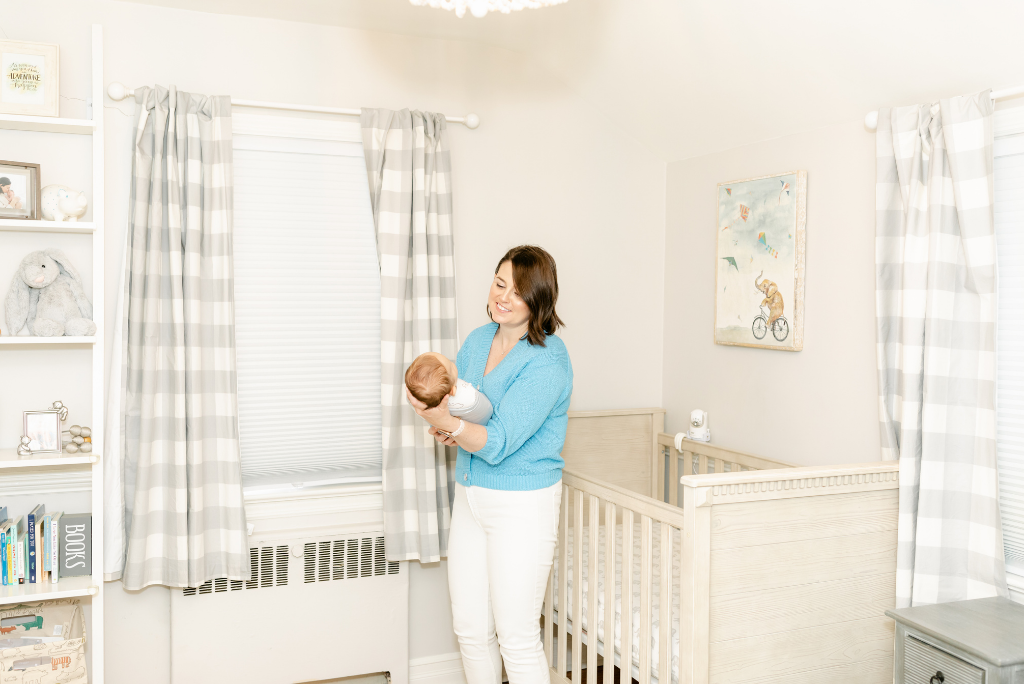
Many newborns arrive with their days and nights flipped, and you can help nudge their body toward the right pattern. During daytime feeds and wake windows, keep things bright and engaging: open the curtains, chat, and let normal household noise happen. At night, keep everything dim, quiet, and boring, with minimal talking and no play.
This contrast helps your baby's developing internal clock learn that night is for longer sleep. If day-night confusion is your main struggle right now, our post on newborn sleep struggles goes further.
Where Feeding Fits In
Feeding and sleep are closely linked in the newborn stage, since a well-fed baby settles more easily. Newborns typically need to eat every two to three hours around the clock, whether you're breastfeeding or formula-feeding, and long daytime stretches between feeds can work against both weight gain and nighttime sleep. A good rule of thumb is to avoid letting daytime sleep run so long that feeds get skipped. Typically we encourage parents to wake a baby at the two hour mark of a nap to avoid a skipped feed. Because every baby is different, always confirm the right feeding frequency for your child's age and weight with your pediatrician before making changes.
What About Sleeping Through the Night?
It helps to hear this plainly: newborns aren't developmentally ready to sleep through the night, and frequent waking is normal, not a sign that anything is wrong. Their small stomachs and rapid growth mean they need to feed often, including overnight.
Longer stretches come with time, as your baby matures and their sleep naturally consolidates over the coming months. In the newborn stage, success isn't a full night of sleep. It's a safe, fed, reasonably settled baby and a rhythm you can both live with.
Final Thoughts
If you take one thing from this, let it be this: newborn sleep is variable and there is no magic wand.. A safe sleep space, attention to wake windows, a few soothing tools, and a flexible rhythm are genuinely the best tools for this stage.
Trust yourself, and watch your baby. They're telling you more than you realize.
If conflicting advice has you second-guessing every nap, you don't have to sort it out alone. Book a complimentary consultation with A Restful Night, and we'll build a calm, realistic approach that fits your newborn and your family.
Meg O'Leary is an Infant and Child Sleep Expert and the founder of A Restful Night. Based in Westchester County, NY, she leads a team of certified sleep coaches to provide virtual support to families across the US and around the world.