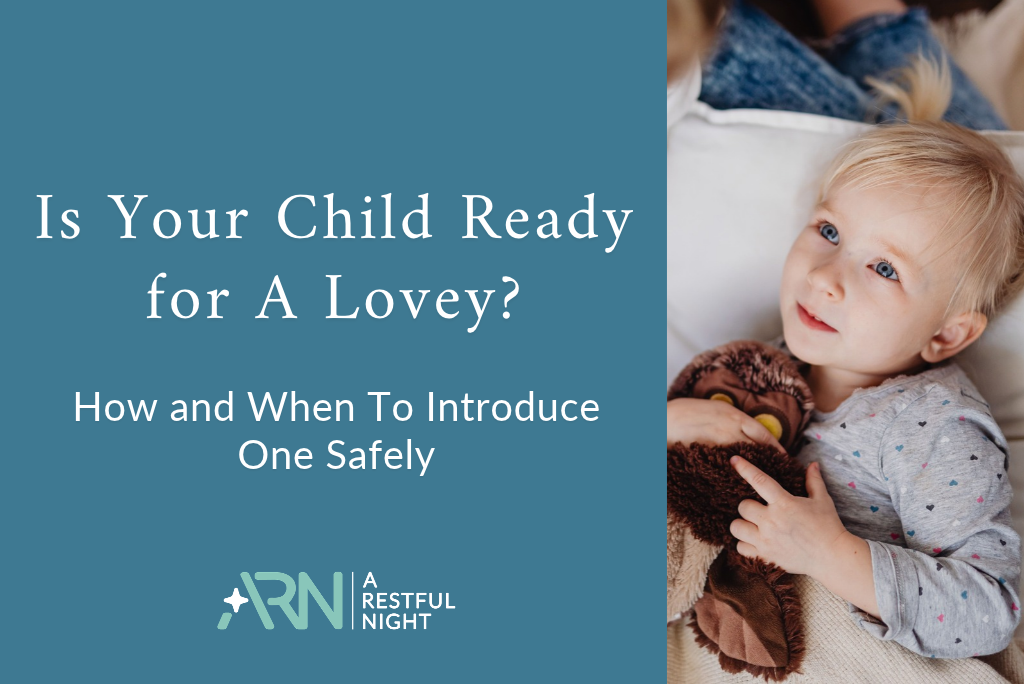
Lovey for Your Baby: How and When to Introduce One Safely
A lovey can become one of the most reliable tools in your child's sleep routine. It's familiar, it travels anywhere, signals sleep and it offers comfort in the moments when you aren't in the room. For many children, it becomes a steady part of bedtime for years.
With four children of my own, I've seen how differently each child can attach (or not) to a comfort item. My youngest has two loveys that he calls his “guys” ; they are important parts of the bedtime routine. My older daughter has a little stuffed unicorn she has slept with since she was a toddler and my other two could care less about anything that even signals a comfort item!
This blog is a helpful 101 for any parent thinking of introducing a lovey to their little one.
When Can A Baby Sleep With a Lovey?
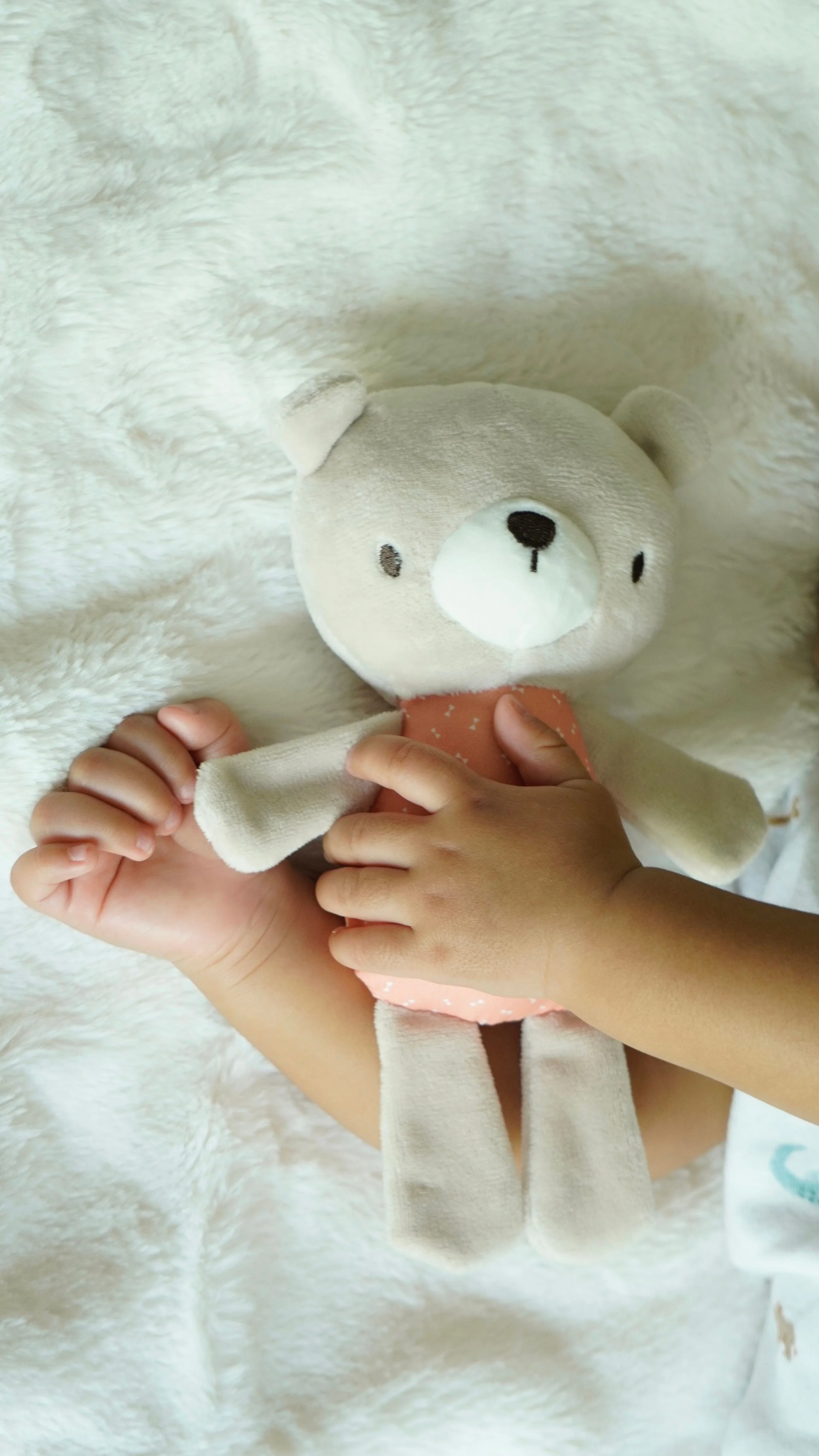
Your baby can sleep with a lovey once they are at least 12 months old. The American Academy of Pediatrics (AAP) recommends keeping soft objects, including stuffed animals, blankets, and pillows, out of the sleep space for the first year because they increase the risk of suffocation and Sudden Infant Death Syndrome (SIDS).
Until then, the safest sleep space is a firm, flat mattress with a fitted sheet and nothing else. For warmth, a sleep sack takes the place of loose blankets. A lovey is something you add after the first birthday, never a substitute for any part of that setup.
You'll see products marketed as breathable, mesh, or safe for infants. AAP guidance doesn't make exceptions for material or size, so wait until 12 months regardless of the label.
What Is a Lovey for a Baby, and How Does It Help Sleep?
A lovey is a small, soft comfort object, often a little blanket with a stuffed animal head or a small plush toy, that a child comes to associate with rest and security. Child development researchers describe these as transitional objects: familiar items that help young children soothe themselves and cope with moments of separation.
For sleep, the value is simple. A lovey is a sleep association your child controls. Rocking, feeding, or lying beside your child all depend on you being there. A lovey is there at 2 a.m. just as it was at bedtime, so it can help your child resettle without needing you.
That's also why a lovey isn't a sleep prop you'll have to break later. A prop is something your child needs from you. A lovey is something they can use on their own, at any hour. In my experience, it supports independent sleep skills rather than working against them, and it's especially helpful during separation awareness phases.
How to Choose a Safe Lovey
Simple is best. Look for a lovey that is:
Soft and small. A small blanket or plush that your child can easily hold and move around on their own.
Without hard or loose parts. Avoid buttons, beads, plastic eyes, batteries, ribbons, or anything that could detach and become a choking hazard. Embroidered details are the safer choice.
Not weighted. Weighted plush toys and weighted blankets are not recommended for infant or toddler sleep.
Separate from the pacifier. Pacifiers with a stuffed animal attached are fine while your baby is awake and supervised, but remove them before sleep. Never attach anything to a pacifier in the crib.
Washable. A lovey will be drooled on, and loved hard. Machine-washable is a must.
Just one. A single item works better than a crib full of options. It keeps the sleep space clear and makes the association stronger.
How to Introduce a Lovey
You can start building familiarity before your baby's first birthday, as long as the lovey stays out of the crib until then.
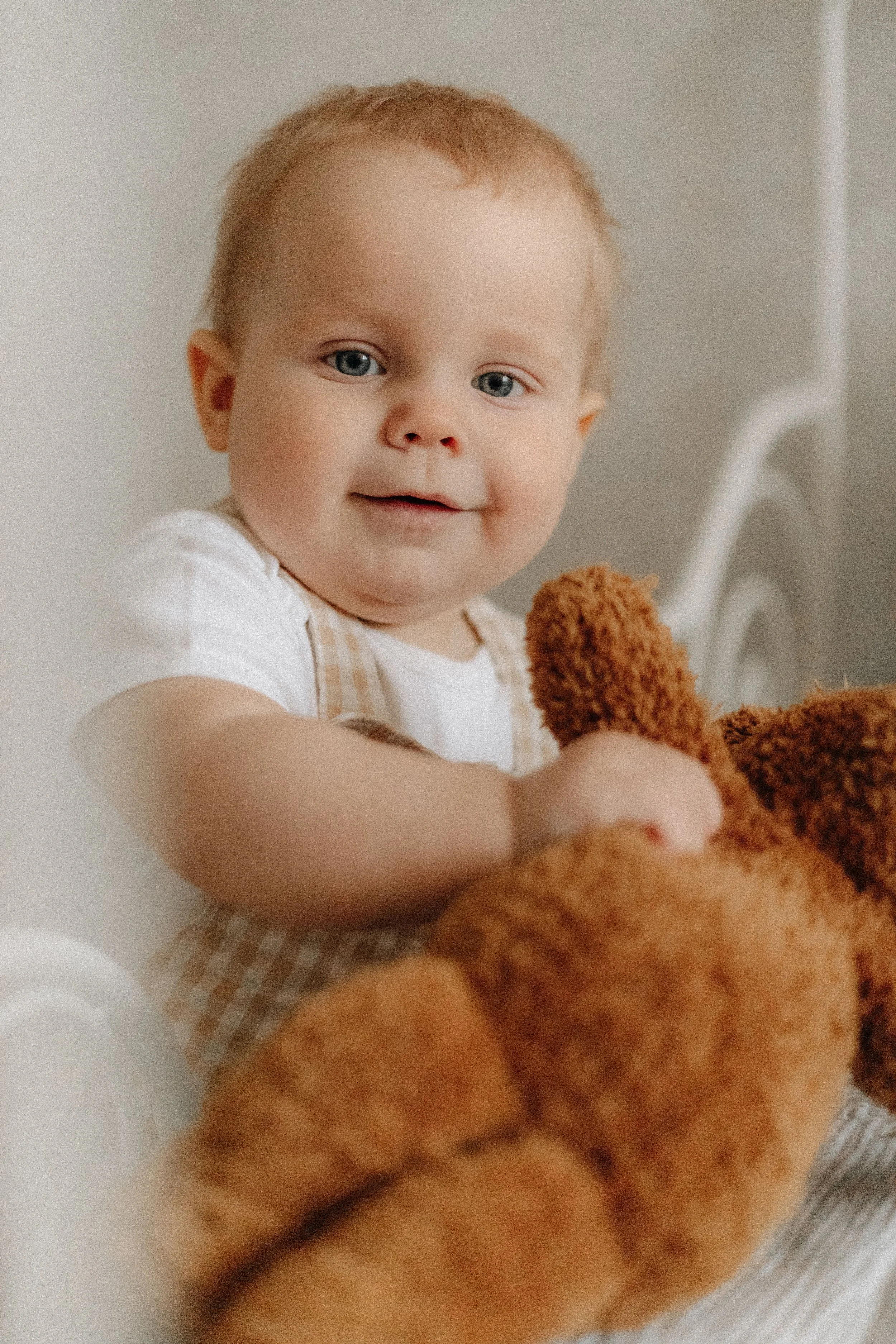
Start during awake time. Hold the lovey during feeds, cuddles, and story time so it becomes connected with calm, close moments. If your baby is under 12 months, set it aside before you place them in their sleep space.
Give it your scent. Keeping the lovey close to you for a few nights before your child starts sleeping with it can make it feel even more familiar.
Make it the last step of the bedtime routine. Once your child is 12 months or older, hand over the lovey right before sleep, with the same words each time, such as "Here's Bunny, time for sleep."
Use it for every sleep. Naps and bedtime alike. Consistency is what turns an object into a sleep cue.
Let a toddler weigh in. If you're introducing a lovey later, offering a choice between two options helps your child feel ownership.
Give it time. Some children bond with a lovey within a week. Others take months, and some never attach at all. All of these are completely normal.
Using a Lovey for Travel, Room Sharing, and Bedtime Fears
A lovey is at its most valuable when everything else is changing. It fits in a diaper bag for holiday travel, makes a Pack 'n Play in an unfamiliar room feel more like home, and gives comfort during sibling room sharing or the move to a big-kid bed. For toddlers working through bedtime fears, it gives them something to hold instead of something to worry about.
Can a Lovey Help With Sleep Training?
A lovey can offer comfort with whichever sleep training approach fits your family. It won't replace the skill of falling asleep independently, but it can make practicing that skill feel more secure. If you're planning to start sleep training soon after the first birthday, introduce the lovey a week or two beforehand so it already feels familiar.
PRO TIP: Always keep the lovey in the crib, when you let your child have their lovey in the house, in the car or as a day to day toy, it loses its meaning!
Final Thoughts
A lovey is a small thing that can make a meaningful difference. Wait until 12 months for sleep, choose something simple and safe, and build familiarity through your routine. Beyond that, let your child lead. Some will carry theirs well into the Big Kid years, and some will leave it in the toy bin. Either way, they're learning that sleep is something they can manage.
If you'd like help building a routine that supports independent sleep, with or without a lovey, book a complimentary consultation with A Restful Night. We'll look at the full picture and build a plan that fits your family.
Meg O'Leary is an Infant and Child Sleep Expert and the founder of A Restful Night. Based in Westchester County, NY, she leads a team of certified sleep coaches to provide virtual support to families across the US and around the world.