Should My Newborn Be on a Schedule?
You've probably heard it from well-meaning friends, seen it in parenting books, or scrolled past it on Instagram: "Get your baby on a schedule right away!"
But here's what nobody tells you: newborns don't belong on schedules. In fact, trying to force a rigid schedule on a brand-new baby often creates more stress than sleep for everyone involved.
What newborns do need is a predictable rhythm that honors their biological needs while gently guiding them toward healthy sleep habits. In this blog, I’ll explain the difference and why it matters.
Does life with a newborn keep you too busy to read a full blog?
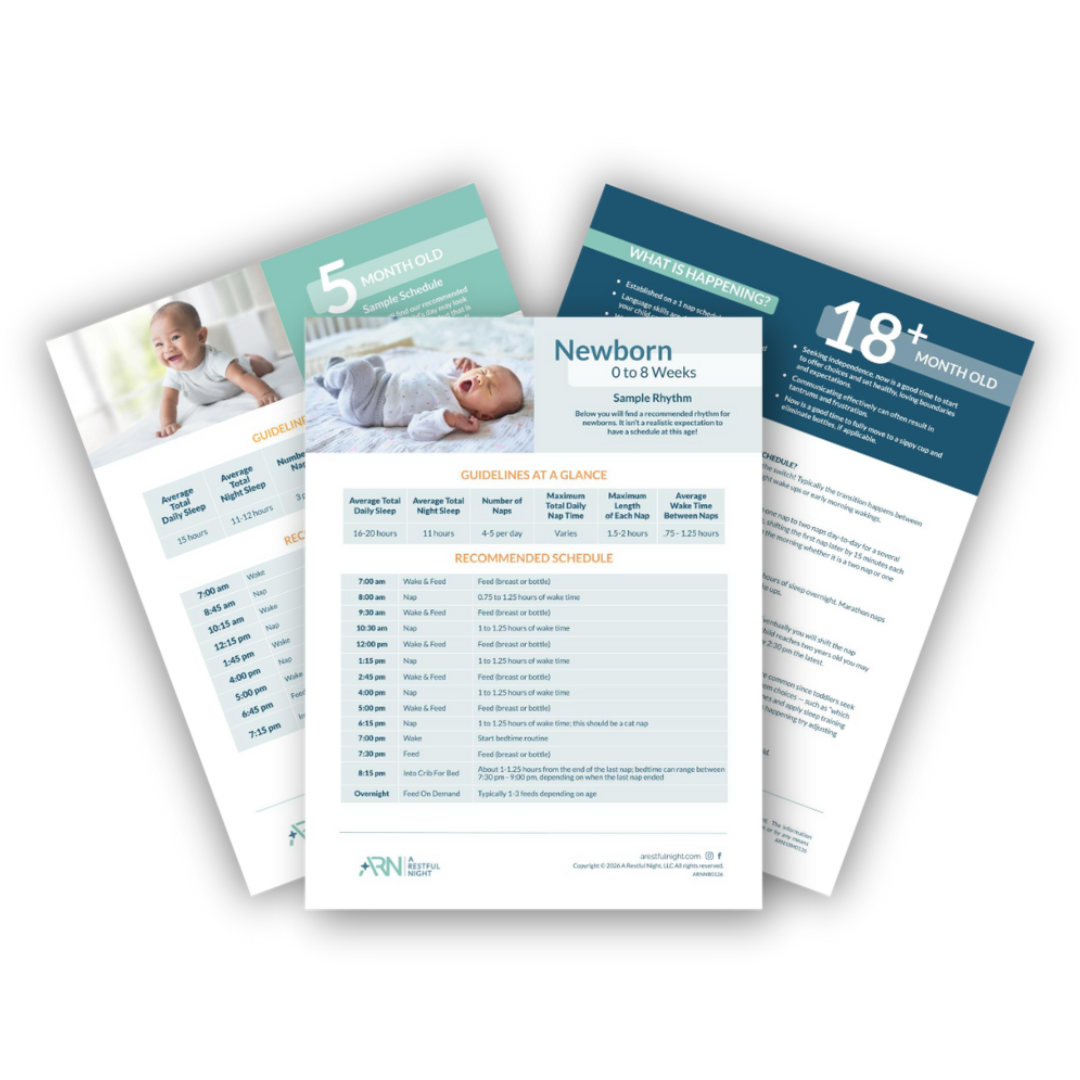
We get it! Grab our complimentary newborn rhythm guide below!
Why Newborns Can't Follow Schedules
A schedule implies specific, clock-based timing. Your baby eats at 7:00 AM, naps at 9:00 AM, and goes to bed at 7:00 PM every single day without deviation.
This approach doesn't work for newborns because their bodies simply aren't ready for it.
Newborns need to eat frequently, typically every 2-3 hours around the clock. Their stomachs are small, they're growing rapidly, and whether you're breastfeeding or formula-feeding, frequent feeds are essential for their development and your milk supply if you're nursing.
Their sleep cycles are short and irregular. Newborns don't have established circadian rhythms yet. They cycle between sleep and wakefulness based on hunger cues, not the time on the clock. Expecting them to sleep at predetermined times sets everyone up for frustration.
Newborns also have very short wake windows. A newborn can typically only stay awake for 45-90 minutes. These wake windows are variable and depend on the quality of their last sleep and how long it's been since their last bottle or nursing session.
Trying to impose a strict schedule on a baby who's developmentally incapable of following one creates unnecessary stress. You end up feeling like you're failing when really, you're just working against biology.
What a Newborn Rhythm Looks Like
Instead of a schedule, think about establishing a rhythm. A rhythm is a flexible pattern that repeats throughout the day, adapting to your baby's needs while providing structure and predictability.
Here's what a healthy newborn rhythm includes:

Eat-wake-sleep cycles. After your baby eats, they have a brief period of alert wakefulness. This might be 20 minutes for a one-week-old or 60 minutes for a six-week-old. Then they sleep until hunger wakes them again, and the cycle repeats.
Consistent responses to sleepy cues. Rather than watching the clock, you watch your baby. When they show signs of tiredness like yawning, eye rubbing, or fussiness, you help them sleep. This might happen at slightly different times each day, and that's perfectly normal.
Predictable soothing and settling techniques. Even if the timing varies, how you help your baby fall asleep should stay relatively consistent. This might include swaddling, white noise, rocking, or whatever combination works for your family.
A simple bedtime routine. Even newborns benefit from a short, calming routine before bed. This might be a bath, a clean diaper, fresh pajamas, feeding, swaddled and then being put down or assisted to sleep. It doesn't need to be elaborate, it just needs to be consistent.
The beauty of a rhythm is that it follows your baby's lead while still providing the structure they need to feel secure and you need to gain a bit of predictability to your day.
Creating a Healthy Newborn Rhythm
Building a rhythm for your newborn doesn't require spreadsheets or strict timing. It requires attention to four key components:
1. Feeding on Demand (With Awareness)
In the early weeks, feed your baby whenever they show hunger cues. This might be every 90 minutes some days and every three hours other days. Both are normal. We typically suggest not letting feeds go more than three hours during the day. Long stretches between feeds can have an impact on weight gain, milk supply (if nursing) and also can lead to more feeds overnight.
If your newborn is sleeping for very long stretches during the day, you may need to wake them to feed. This ensures they're getting enough nutrition and helps establish the pattern of longer sleep stretches happening at night rather than during the day. A good guideline is to not let your newborn sleep more than 2 hours at a time maximum during the day, and even 90 minutes is a great nap.
Work with your pediatrician to determine the right feeding frequency for your baby's age and weight.
2. Appropriate Wake Windows
Understanding wake windows is one of the most valuable tools you have as a new parent. A wake window is the amount of time your baby can comfortably stay awake between sleep periods.
For newborns, wake windows are short. A one-week-old might only handle 45 minutes awake, while a two-month-old might manage 90 minutes. These windows include the time it takes to feed, burp, change, and settle your baby for sleep.
When you start seeing sleepy cues near the end of an appropriate wake window, that's your signal to begin helping your baby wind down. You're not watching the clock to say "it's 9:00 AM so you must nap now." You're watching your baby to say "you've been awake for about an hour and you're showing me you're tired, so let's help you sleep."
TIP: Check out our post on Understanding Wake Windows
3. Safe Sleep Environments
Every single sleep, whether it's a 20-minute catnap or a longer stretch at night, should happen in a safe sleep space.
This means always placing your baby on their back to sleep in a crib, bassinet, or pack-and-play with a firm, flat mattress and a fitted sheet. No pillows, blankets, bumpers, or stuffed animals for babies under 12 months.
Contact naps where your baby sleeps on your chest are wonderful for bonding and perfectly safe when you're sitting up, awake and alert. But when you need to put your baby down, safe sleep guidelines are non-negotiable.
TIP: Check out our blog on creating Safe Sleep Spaces for children of all ages!
4. Day-Night Differentiation
While newborns don't follow schedules, you can gently help them learn the difference between day and night.
During daytime feeds and wake windows, keep things bright and engaging. Open the curtains, talk to your baby, and don't worry about household noise.
During nighttime feeds and wake periods, keep things dim and calm. Use minimal lighting, keep your voice quiet, and avoid stimulating play. This helps your baby's body begin to recognize that nighttime is for longer sleep stretches.
TIP: We have a full blog on everything you need to know about Day-Night Confusion
When Rhythms Naturally Evolve Into Schedules

Here's the good news: as your baby grows, their rhythm will naturally become more predictable and schedule-like without you forcing it.
Around 3-4 months, most babies begin to consolidate their sleep into more defined naps and longer nighttime stretches. Their wake windows become more predictable, and you might notice that naps start happening around similar times each day.
By 6 months, many babies are ready for a more structured schedule with set nap times and a more consistent bedtime. At this point, their circadian rhythms have matured, and they can handle the predictability of clock-based timing.
The transition from rhythm to schedule happens gradually and naturally when you've built a strong foundation in those early weeks. You're not starting from scratch at 6 months, you're simply adding more structure to patterns that are already established.
Final Thoughts
The early weeks with a newborn are intense, exhausting, and full of uncertainty. Letting go of the pressure to establish a rigid schedule can actually be freeing.
Instead of watching the clock and wondering why your baby won't conform to what the book says they should do, you can watch your baby and respond to what they're actually telling you they need.
A flexible rhythm built on feeding cues, appropriate wake windows, and consistent soothing gives your newborn exactly what they need right now while laying the groundwork for healthy sleep habits as they grow.
Trust yourself. Watch your baby. Establish gentle patterns without rigid rules. The schedule will come naturally when your baby is developmentally ready for it.
If you're feeling overwhelmed by conflicting advice about newborn sleep or struggling to establish a rhythm that works for your family, you don't have to figure it out alone. Schedule a complimentary consultation call, and we'll create a personalized approach that honors your baby's developmental stage and your family's unique needs.
Need a schedule that actually works?
Expertly Curated Sleep Schedules
We believe the perfect schedule should bring predicability and flexibility to your child’s day. Founder and lead sleep consultant Meg O’Leary has designed these schedules to do that. Covering sleep from the newborn stage up until 18+ months, find your perfect schedule at the link below!
Meg O'Leary is an Infant and Child Sleep Expert and the founder of A Restful Night. Based in Westchester County, NY, she leads a team of certified sleep coaches to provide virtual support to families across the US and around the world.