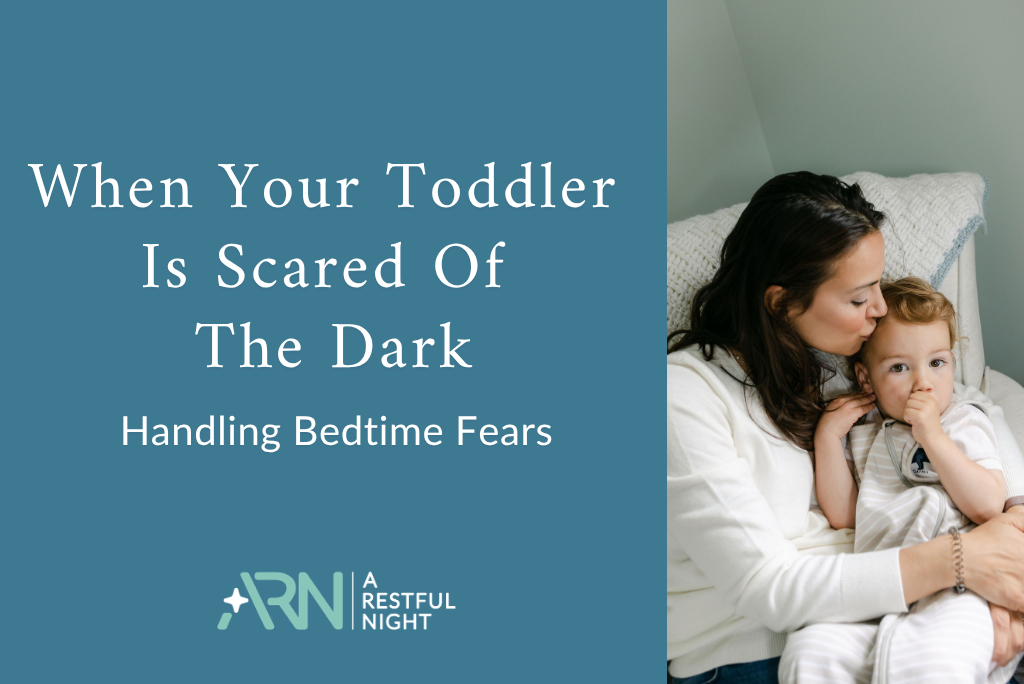
When Your Toddler Is Scared of the Dark: Handling Bedtime Fears
"Can you leave the light on?"
"There’s something in my closet."
"Can you just stay for a minute?"
Your toddler used to go to bed without much negotiation. Now bedtime comes with a list of requests, and somewhere in that list are the words every parent dreads: I’m scared.
If this seemed to come out of nowhere, you’re not alone, and you haven’t done anything wrong. Fear of the dark is one of the most common developmental shifts of the toddler years, and it shows up right as your child’s imagination takes off. It’s also one of the more workable sleep struggles, because it responds well to a calm, predictable response repeated over time.
Why Toddlers Become Afraid of the Dark
Most children become afraid of the dark between ages two and four. Research on early childhood development shows that imagination develops faster than the ability to sort real from pretend, so shadows, unfamiliar sounds, and something a child half-heard during the day can feel genuinely threatening once the lights go off. In most toddlers, this is a normal phase rather than a sign that something is wrong.
Usually a few things are happening at once, and it helps to know which ones are in play at your house.
Imagination arrives before logic does
A two-year-old can picture something that isn’t there. What they can’t do yet is talk themselves out of it. Telling your toddler that monsters aren’t real makes perfect sense to you, and it won’t land the same way for them, because their brain simply isn’t there yet.
Separation awareness resurfaces
Bedtime is the longest stretch of the day your child spends away from you. Around this same age, many toddlers become newly aware of that separation, and the dark gives that feeling something concrete to attach to. In my experience, fear of the dark and a sudden need for company at bedtime almost always show up together, and I’ve watched it play out in my own house more than once.
Fear and stalling can look identical
Your toddler can be genuinely uneasy about the dark and also notice that saying so brings you right back into the room. Both are real, and honestly, you don’t need to figure out which one you’re dealing with. A calm, consistent response works for both, which is true of most bedtime battles at this age.
How to Respond to Bedtime Fears Without Feeding Them
The goal isn’t to talk your child out of the fears. It’s to show them, night after night, that their room is safe and that you believe it. Your energy sets the tone here. If you seem worried, your toddler will be too.

Acknowledge the fear, then move on. Something short works best: "Your room is safe, and I’m right down the hall." Long conversations about what might be under the bed give the fear more airtime and more importance than it needs.
Add light once, deliberately. Decide on your lighting setup during the day, when nobody is tired, then keep it the same. Adding a new light every night in response to a new worry teaches your toddler that the setup is up for negotiation.
Keep the bedtime routine predictable. Same steps, same order, same room, every single night. Predictability is what tells your toddler that nothing surprising is coming.
Skip the monster hunt. Checking the closet, spraying the room, sweeping under the bed with a flashlight: these seem harmless, and they quietly confirm that the room needed checking in the first place. If your toddler asks, you can say, "I already know your room is safe."
Give your child something to hold. A lovey, a favorite stuffed animal, or a small flashlight they control gives them a job at bedtime instead of something to lie there and worry about.
Respond the same way every time. If your toddler calls out, a brief, boring check-in beats a long visit. Door checks work well here, because they let you show up on a schedule you set rather than one your toddler sets.
Spend time in their room during the day. Build confidence in their sleep space during safe, bright hours when pressure and emotions are lower.
What About Night Lights?
A night light is absolutely fine, and for a toddler working through fear of the dark it’s often genuinely helpful. What matters is how you use it.
Keep it dim, typically a warm, ambient light in white or red color. Avoid blue lights which can be disruptive to sleep. Avoid lights that project on a ceiling or have movement which can be stimulating. Place it low, out of your child’s direct line of sight, and away from the bed so it isn’t throwing shadows across the wall. One light is plenty. A room bright enough to read in is working against you.
If your child sleeps in a fully dark room and has been happy with it, there’s no need to add a light preemptively.
When the Fear Has Already Changed Bedtime
By the time you’re reading this, you may already be lying down with your child until they fall asleep, sitting in the hallway, or bringing them into your room at 2 a.m. because it was the only way anyone got any rest.
No judgment here. When you’re that tired, you do what works. It’s worth knowing, though, that most children grow out of fears while the habits built around it tend to stick around longer. The fear fades on its own. The expectation that a parent stays in the room usually doesn’t.

Unwinding it works best in steps. If you’ve been lying in the bed, move to a chair beside it. Once that’s settled, move the chair closer to the door, then into the hallway. Change one thing at a time and hold it for several nights before the next step, so your toddler always knows what tonight is going to look like. A gradual exit gives them room to practice falling asleep on their own without feeling like your support disappeared overnight.
Final Thoughts
Bedtime fears are one of those parts of toddlerhood that feel much bigger in the moment than they turn out to be. Your child isn’t broken, and this isn’t a step backward. It’s a sign that their imagination is growing faster than their ability to manage what it comes up with.
What helps is steadiness. Take the fear seriously, keep your response short and confident, hold your routine, and let your toddler see that you aren’t worried. Your consistency is what does the work here, and this phase really does pass.
If bedtime has turned into a long negotiation and you’re not sure which piece to address first, book a complimentary consultation with A Restful Night. We will look at the full picture and build a plan that fits your family.
Meg O'Leary is an Infant and Child Sleep Expert and the founder of A Restful Night. Based in Westchester County, NY, she leads a team of certified sleep coaches to provide virtual support to families across the US and around the world.