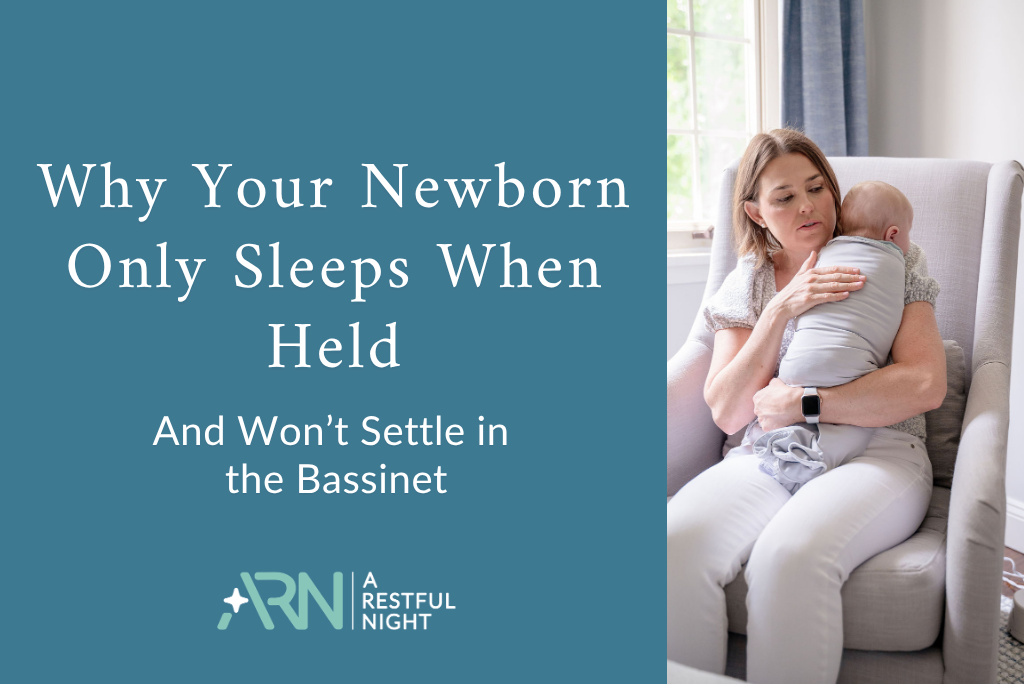
Why Your Newborn Only Sleeps When Held (and Won’t Settle in the Bassinet)
Your newborn has been asleep in your arms for a solid twenty minutes. Their breathing has slowed, their hands have finally uncurled, and you are certain this is the moment. You lower them toward the bassinet, and their eyes fly open before their back even touches the mattress.
I get it. With four children of my own, I have done that slow-motion crouch over a bassinet more times than I can count, and I know how defeating it feels at 2 a.m. when it does not work.
Here is what I want you to hear first: a baby who only sleeps when held is not a spoiled baby, and you have not created a habit you cannot undo.
Why Does My Baby Only Sleep When Held?
Babies sleep best in arms because being held recreates the environment they knew before birth: contained, warm, curved, and constantly moving. A bassinet mattress is flat, firm, still, and cooler by comparison. When a newborn is transferred from one to the other, their nervous system registers every one of those changes at once, and that is often enough to wake them.
An active startle reflex makes the transfer harder still. Research on newborn development describes the startle reflex, also called the Moro reflex, as an involuntary response that is present from birth and typically fades somewhere between three and six months. A sudden change in head position, or the sensation of falling, causes the arms to fling outward. That motion wakes plenty of babies who were genuinely, deeply asleep.
Babies Are More Sensitive on Their Backs, and That Is by Design
Newborns are roused more easily when lying on their backs than in almost any other position. Arousal is lighter, movement is freer, and small disturbances register more.
So the goal is never to make back sleeping feel identical to being held. The goal is to help your baby build tolerance for a position that is safe but genuinely less familiar, and that comes down to repetition. Our tips for safe sleep spaces and practices post covers setting the space up correctly before you start
How Swaddling Supports Back Sleeping
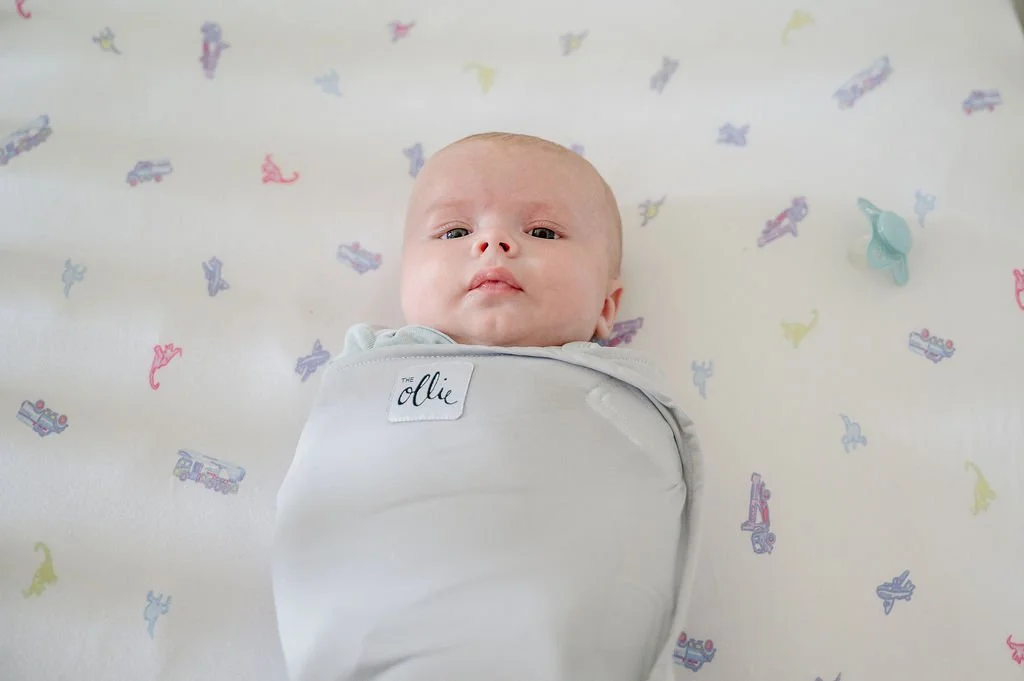
Swaddling is the most useful tool I recommend during the newborn stage, largely because it addresses the exact problem the bassinet creates. A well-fitted swaddle contains the arms so the startle reflex cannot interrupt sleep, and it restores some of the containment your baby feels in your arms.
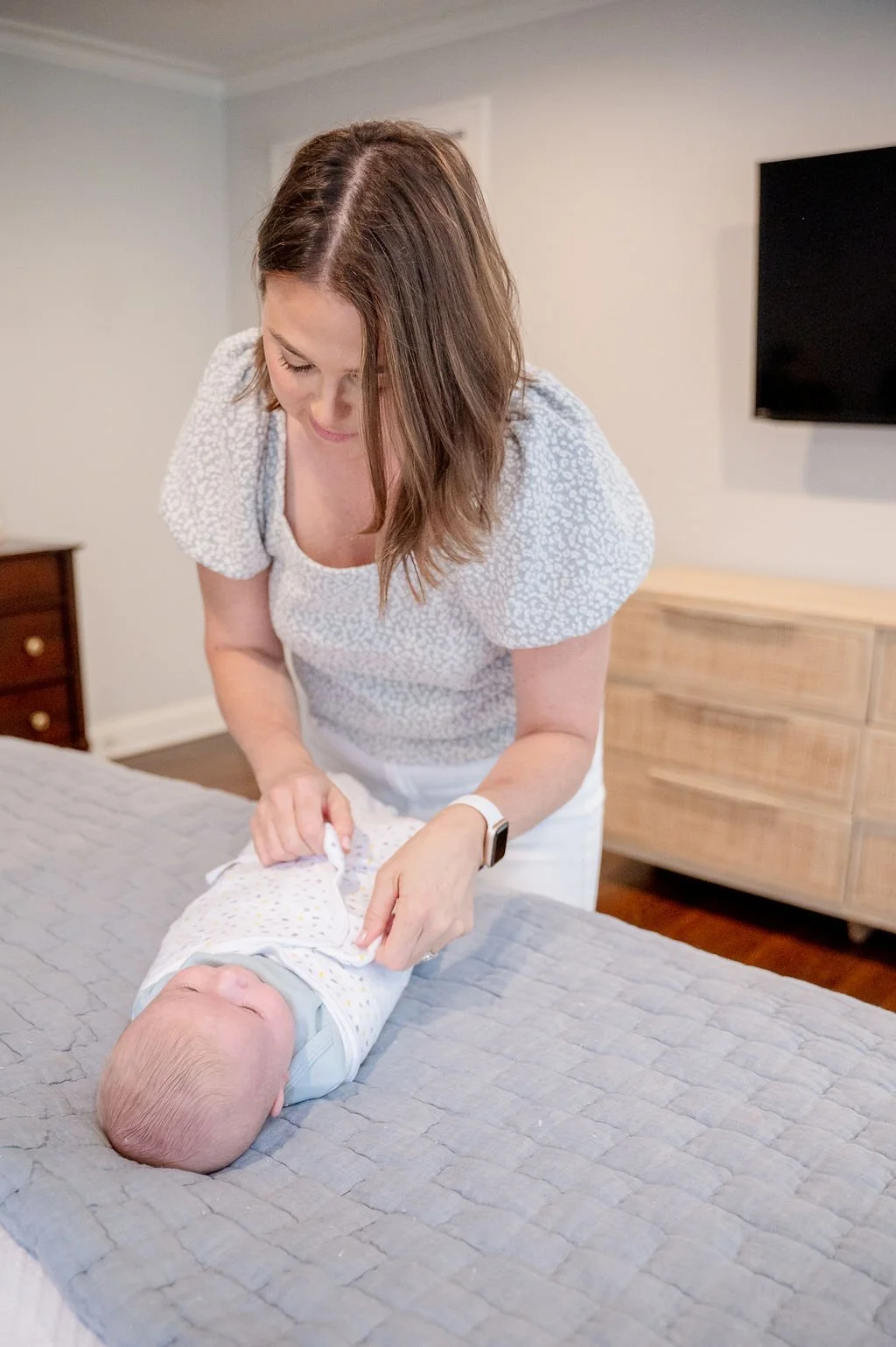
Used correctly, a swaddle makes the back-lying position feel less exposed. Used incorrectly, it introduces risk, so these rules are not negotiable:
Wrap snugly across the chest and arms, but leave the hips and legs loose enough to move freely.
Swaddle for back sleeping only, in a bare sleep space.
Stop swaddling at the very first sign your baby is attempting to roll, even if that arrives earlier than you expected.
Never swaddle in a car seat, carrier, or stroller.
Dress your baby in one light layer underneath so they do not overheat.
When rolling does arrive and the swaddle has to go, our best sleep sacks post covers what to move into next.
Practice Back Sleeping During the Day, Not at 2 a.m.
This is the shift that changes outcomes for most of the families we work with. Parents tend to save every bassinet attempt for the middle of the night, when everyone is depleted. Daytime is where the skill is actually built.
Use the first nap of the day. The first stretch after your baby’s morning wake-up is usually their easiest sleep of the day. Swaddle, place your baby down on their back, and let the bassinet get the best version of your newborn rather than the hardest one.
Keep the goal small. Twenty minutes in the bassinet is a real win in week two, truly. You are building familiarity, not a full nap schedule. If your baby wakes after ten minutes, you have still built some familiarity!
Repeat instead of perfecting. Five short, calm attempts across a day teach your baby more than one long battle at midnight. When an attempt falls apart, pick your baby up, reset, and try again at the next opportunity. We encourage two attempts a day at minimum.
How to Get a Newborn to Sleep in the Bassinet
When you are ready to attempt a crib or bassinet nap, try this sequence:
Change your baby’s diaper, to ensure you are initiating a nap knowing they are fed, burped and dry.
Swaddle before your baby falls asleep, at the start of your nap routine.
Prep yourself and the room by turning on white noise and taking a few calming deep breaths. Your energy is everything and your baby will feel that!
Sing a song and hold your baby to calm, if needed you can gently sway until they are calm and relaxed or are fully asleep, then transfer to the crib or bassinet.
If you wait for a deep sleep, hold them for 15 to 20 minutes after your baby drifts off, look for limp arms, unclenched hands, and slow, even breathing.
Lower feet and bottom first, head last, keeping your baby slightly curved rather than flat until the moment they land.
Rest one hand on your baby’s chest for 20 to 30 seconds after you let go. That continued pressure smooths the transition
Where Contact Naps Fit
Contact naps are totally permissible and encouraged! Sometimes you need the break and it just perfectly coincides with your baby’s nap time. Holding your sleeping newborn is one of the genuine pleasures of these weeks, and it is safe when you are awake, alert, and seated upright. If you feel yourself getting drowsy, place your baby in their own sleep space on their back.
Aiming for one or two practice sleeps a day in the bassinet or crib, with the rest wherever your family needs them to be, is a reasonable place to start.
Final Thoughts
Newborn progress is rarely a straight line, and a rough night after a strong day does not mean you have lost ground. There are three P’s in newborn sleep: Practice, Patience and Perspective.
Practice: Everyday is a new day and a chance to work on sleep skills gradually.
Patience: Not every nap will be a success and that’s okay, be calm and collected and try again next nap.
Perspective: Babies are not born with the ability to fall asleep on their own. You have to teach them! Remember your baby is new to this world and you are learning together!
The good news is that this stage is genuinely temporary. The startle reflex fades, the swaddle does its job in the meantime, and the practice you are putting in during the day is what your baby will draw on later. You are not behind, you are right where you need to be.
If you are exhausted and you would rather not sort through it alone, book a complimentary consultation with A Restful Night. We will look at the full picture together, then give you a clear next step that fits your family.
Meg O'Leary is an Infant and Child Sleep Expert and the founder of A Restful Night. Based in Westchester County, NY, she leads a team of certified sleep coaches to provide virtual support to families across the US and around the world.