Are you wondering when to start sleep training or you’re worried you’ve missed your chance? Maybe the newborn weeks are behind you and the nights aren't getting easier the way you hoped. Or maybe you're still in the thick of it and want to know what's coming next.
Here's the reassuring part: there's no single perfect moment, and there's no age where it's too late. There are, however, considerations for each age and windows where independent sleep tends to click faster.
When Can You Start Sleep Training a Baby?
You can start a formal sleep training plan as early as 14 weeks, with your pediatrician's approval, and most families see the best results between 14 and 20 weeks. At this age, many babies are sleeping longer stretches, are ready to move out of the swaddle and into the crib, and are looking for a rhythm to their day. Sleep training can absolutely work at 6, 8, or 12 months, but the approach shifts as your baby grows.
Why Independent Sleep Is a Learned Skill
Just like walking, swimming and riding a bike (one day!), falling asleep independently is a learned skill. In the early weeks, parents do what works, often feeding, rocking, holding, bouncing. None of that is wrong but over time, those strategies can inadvertently become the only way your baby knows how to fall asleep.
I tend to see families fall into two categories when it comes to teaching their children how to sleep.. Some start building independent sleep skills early, with plenty of parental support. Others keep doing what's working until it isn't, then decide to sleep train.
THOUGHT: Whatever age you start, sleep training shouldn't feel like a sharp left turn or something you're doing to your child. It's about choosing strategies that fit your baby's age and your parenting philosophy.
Sleep Training by Age: What to Expect From Newborn to 12 Months
The right strategy depends on your baby's age, their mobility, where they sleep, and what they currently rely on to fall asleep. Here's how I think about the first year.
1. Newborn Sleep Shaping (0 to 14 Weeks)
Before 14 weeks, the focus is sleep shaping: small, gradual habits that start to build some sleep cues and lay the groundwork for independent sleep later. At this age you can start to develop simple routines and aim for one or two naps a day in the bassinet or crib, put your baby down calm but awake when the moment allows, and keep a simple, predictable routine around sleep.
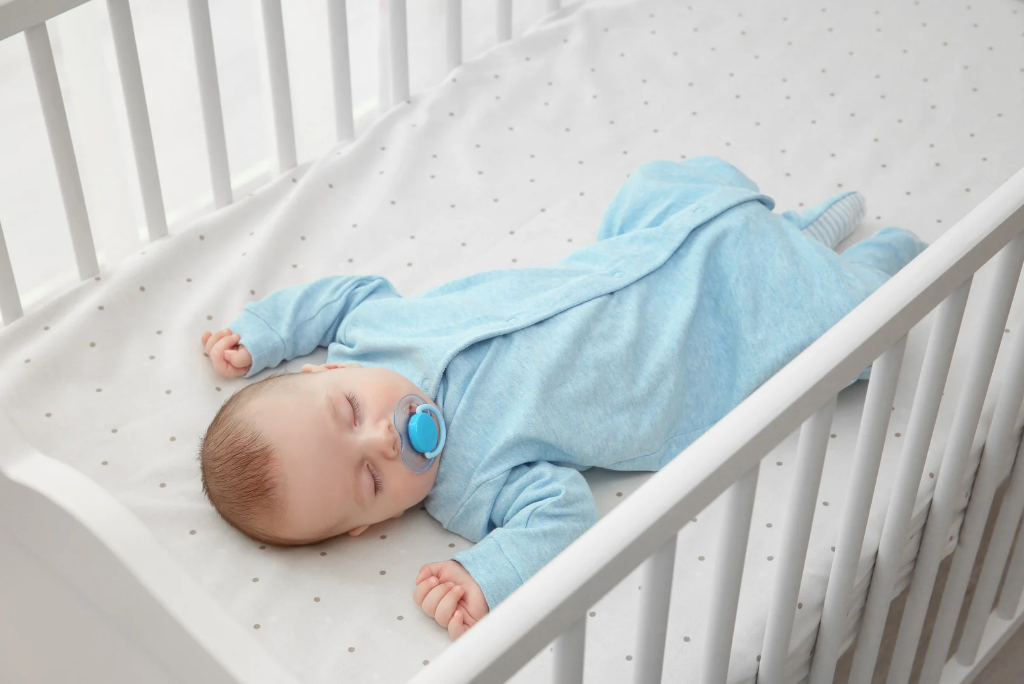
Frequent night feeds are expected and appropriate at this stage. Every time you put your baby down, you should be putting them on their baby's back, on a firm, flat, empty surface, following safe sleep practices from the very first night.
2. Sleep Training a 4 Month Old: Why 14 to 20 Weeks Is the Sweet Spot
If I could pick a starting point for most families, it would be here. Many babies are stretching their night sleep, some are starting to get to their side, and we can help you move your baby out of the swaddle and into a sleep sack and the crib. Swaddling must stop at the first sign your baby is attempting to roll.
Babies this age also haven't fully caught on to cause and effect. They know exactly who you are, but many sleep patterns haven't connected for them yet, so confidence in the crib tends to build quickly.
Daytime helps, too. Babies at four to five months are usually on three or four naps, which means plenty of chances to practice. Not every nap needs to be a practice nap. In my experience, when families work on two naps a day, bedtime clicks quickly and the nights get easier much faster. This is also the age where parents get the most value from our Two-Week Full Support Program.
3. Sleep Training a 6 Month Old: Starting Between 5 and 7 Months
Starting before six months is generally easier because most babies aren't sitting, crawling or standing yet. Some parents wait until now because they feel their baby is more ready, and that's a completely valid choice and a very workable age!.
Just expect a little more protest than you might see at four months. Your baby has had longer to build their current sleep associations, and rolling or early sitting can add movement to the mix. If night feeds are still common, you should talk with your pediatrician before making any changes. Our guide to 7 month old sleep covers schedules for this stage in more detail.
4. Sleep Training an 8 to 12 Month Old: How Mobility Changes the Approach
Once babies get up on all fours, sit, and pull to stand in the crib, protest can reach a whole new level. Separation awareness is also peaking, which adds an emotional layer to bedtime.
Naps shift, too with ost babies being on two naps by around nine months, and nap training at this age can take longer. Sleep pressure is lower during the day, it's light outside, and your 10 month old may have a real case of FOMO. It's very common for nights to come together first while naps take a bit more patience. Knowing what's typical during sleep regressions at this age can help you separate a phase from a pattern.
Common Myths About the Best Age to Sleep Train
There's a lot of conflicting advice about sleep training timing, and much of it leaves parents feeling like they've already missed their chance. Here are the misconceptions I hear most often.
1. Myth: You Can't Do Anything Before 14 Weeks
Fourteen weeks is when we find families get the most value from a formal program, not the first day independent sleep becomes possible. Sleep shaping in the newborn weeks, like practicing a nap or two in the bassinet and putting your baby down awake when you can, builds real skill. When you do start a more structured plan, your baby isn't starting from zero.
2. Myth: Feeding or Rocking to Sleep Means You Did Something Wrong
Feeding, rocking, and holding your baby to sleep are not wrong by any means. They're what makes sense in the early weeks, and they meet real needs. Over time, they can inadvertently become the only way your baby knows how to fall asleep, but that's a pattern you can change at any age. Choosing to teach a new skill isn't a correction of anything you did before.
3. Myth: Waiting Longer Makes Sleep Training Easier
It's an understandable instinct, and some parents wait because they feel their baby will be more ready later. In my experience, the opposite is usually true. An older baby has had more time with their current sleep associations and more ways to express their opinion about change, like standing in the crib. That doesn't make it harder to succeed. It just makes the process look different, and naps in particular may take more patience.
4. Myth: Sleep Training Means Leaving Your Baby to Cry
Extinction, also known as Cry It Out (CIO) is one option, but it's far from the only one and many parents don’t love this concept. Families who want to stay close often prefer the chair method, while others like the structure of check and console. There are also gradual approaches for families who want to move at a slower pace. The right method is the one that fits your values and that you can follow consistently.
Is Your Baby Ready for Sleep Training? A Quick Self-Check
Before you start, take stock of where your family is:
Is your baby at least 14 weeks old, and has your pediatrician given the green light?
Is your current routine getting harder rather than easier?
Are you, and your parenting partner or other caregivers, ready to follow a consistent plan for about two weeks?
Do you have a stretch ahead without travel, illness, or a big transition like starting daycare?
Have you chosen an approach that feels right for your comfort level?
If you answered yes to most of these, you're likely ready. The most important ingredient isn't your baby's age. It's your readiness to make a little change in order to see change.
Final Thoughts
The best age to sleep train is the one where your family is ready to commit. Starting between 14 and 20 weeks often makes the process click faster, but babies at six, eight, and twelve months learn this skill every day with the right strategy.
Your baby is capable of more than you might think, and you don't have to figure out the timing alone. If you're unsure where to begin, book a complimentary consultation with A Restful Night. We'll look at the full picture together and build a plan that fits your baby's age and your family's approach.
Meg O'Leary is an Infant and Child Sleep Expert and the founder of A Restful Night. Based in Westchester County, NY, she leads a team of certified sleep coaches to provide virtual support to families across the US and around the world.