Routines for Toddlers and Preschoolers: Improve Sleep, Behavior, and Confidence
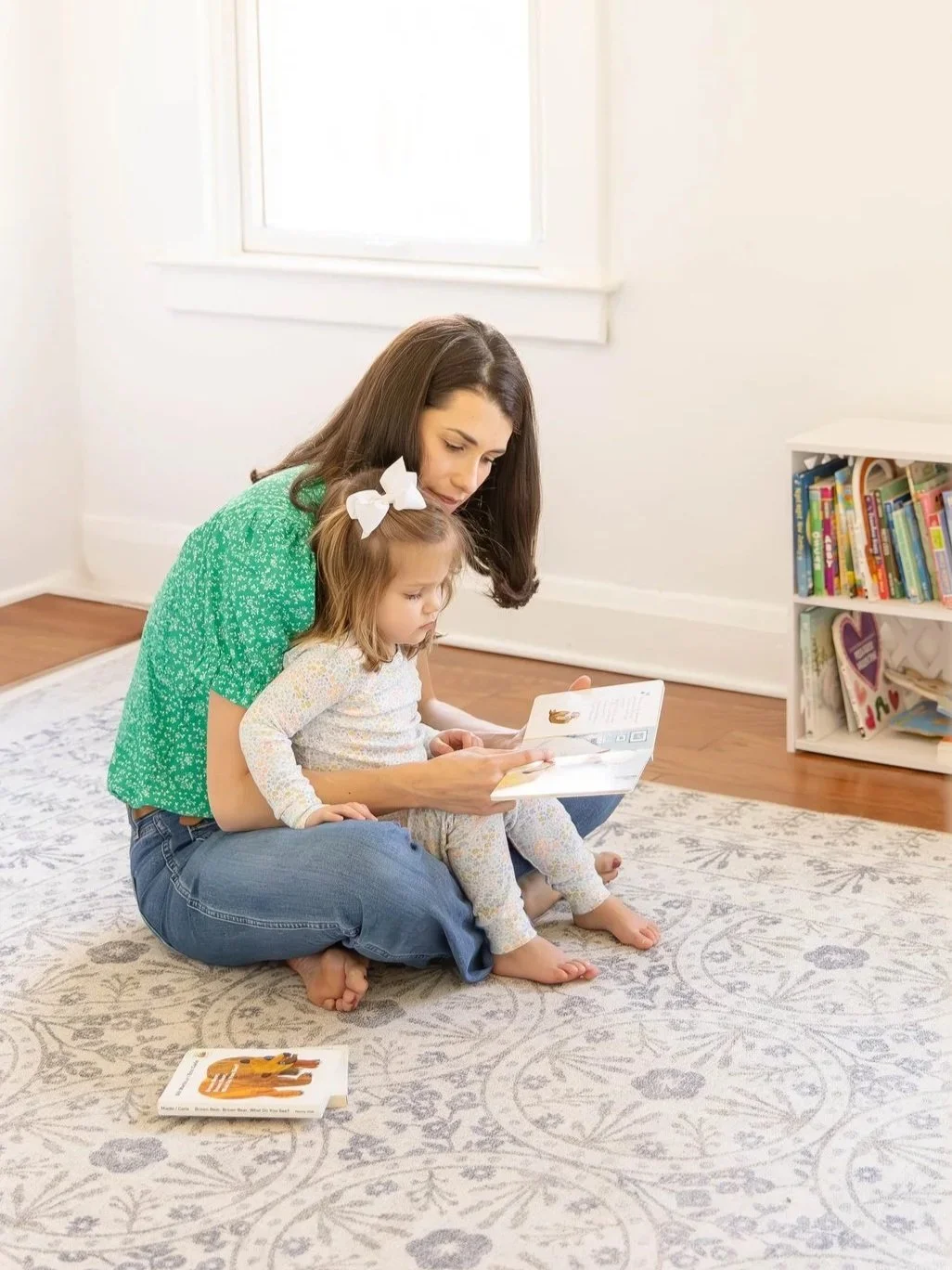
Over my years as an infant and toddler sleep expert, one thing I’ve seen again and again is that sleep is just one piece of a much bigger puzzle. The way your child falls asleep (or doesn’t) is often directly connected to how the rest of the day is flowing—how transitions are handled, how expectations are set, and how much structure exists in your home.
Just as importantly, it’s often tied to how you’re showing up as a parent in those moments. And let’s be honest: it’s difficult to show up as your best self when no one is getting a proper night’s sleep.
That’s why when I first connected with certified parent coach Ellie Knott, it immediately clicked. We work in different spaces—sleep consulting and parent coaching—but the way we think about kids, behavior, and structure is incredibly aligned.
Neither Ellie or I are interested in rigid systems or one-size-fits-all solutions. What we are interested in is helping families create rhythms that actually work in real life.
And that’s where routines come in:
What a Routine Actually Means (and Why Most Parents Overthink It)
When parents hear “routine,” there’s an immediate tendency to overcomplicate it.
At A Restful Night, we see this all the time – getting questions like:
“Should I let my child pick their pajamas or should I lay them out?”
“What if we don’t read the same number of books every night?”
The truth is, that level of detail isn’t at the heart of the issue. A routine isn’t about doing the exact same thing in the exact same order every single time. It’s about having a predictable flow—a general sense of what happens next.
I always think about a great routine in terms of anchors:
At bedtime, for example, your anchors might be:
Getting clean
Brushing teeth
Pajamas
A book
Getting into bed
That’s it. Everything else can be flexible. And interestingly, flexibility is often what makes routines work.
Kids don’t need perfection—they need clarity and predictability.
Why Routines Start to Matter More (Not Less) As Kids Grow
A lot of parents feel like once they’re out of the baby phase, routines are no longer necessary. In reality, the opposite is true.
Toddlers and preschoolers are in this constant push and pull between:
Wanting independence
Needing support
Testing boundaries
Managing really big emotions
With structure, kids don’t have to question every step of the day—they can just move through it.
I see this all the time, both in my own home and in the families I work with. When my four kids (ranging from ages 3 to 8) know what’s expected, everything runs more smoothly: mornings, school drop offs, and bedtime. It’s not about perfection, it’s about predictability.
Ellie shared something from her experience as a teacher (primarily pre-school aged) that really stuck with me: routines help kids feel rooted in their environment. And when kids feel grounded like that, they actually handle change better—not worse.
That’s the goal. Not rigidity, but a sense of:
“I know how things work here, and I feel confident enough to adapt when something shifts.”
Where This Shows Up First: Bedtime
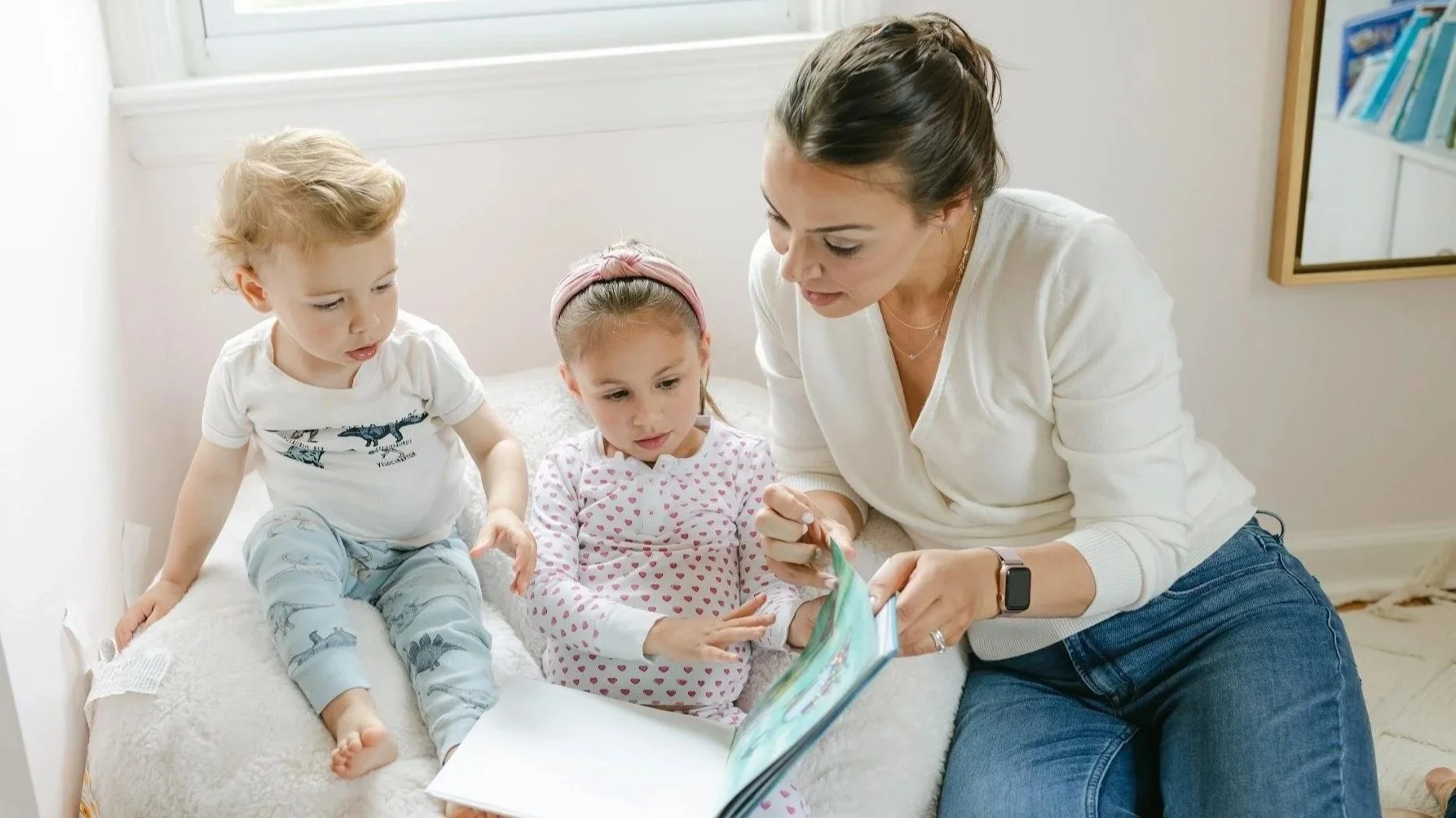
Even in families where the day feels mostly manageable, bedtime is usually where things fall apart. It makes sense when you think about it—kids are tired, parents are tired, and it’s one of the biggest transitions of the day.
If there isn’t a clear routine, bedtime can quickly turn into:
One more book
One more drink
One more question
One more trip out of the room
And suddenly, you’re stuck in this loop that feels impossible to break.
Neither Ellie nor I claim that a consistent routine eliminates these moments completely, but we do agree that it changes how they play out. When there’s a routine in place, bedtime is no longer entirely up for negotiation. There’s a clear expectation of what happens, and that alone tends to reduce a lot of the resistance.
It also gives you more clarity as a parent around when it makes sense to be flexible. If your child isn’t feeling well, offering an extra sip of water before bed is reasonable. If they’ve had a tough day, you might want to spend a little more time connecting before starting the routine.
The difference is that these moments are intentional, not reactive, and not a result of a power struggle between parent and child.
Once your child understands what the typical routine looks like, it becomes much easier to explain when something is changing. You can be direct and say, “We’re going to do things a little differently tonight, but tomorrow we’ll go back to our usual routine.”
Both Ellie and I encourage parents to be explicit in these moments. Clear communication helps your child understand what’s happening and what to expect next, which makes those small adjustments much easier for them to handle.
TIP: If you’re looking to build a great bedtime routine for your child, read our 6 Step Guide to Building the Perfect Bedtime Routine
The Part Most Parents Miss: Routines Build Independence
This is the piece I think gets overlooked the most. Routines aren’t just about getting through the day more smoothly—they’re actually one of the most effective ways to build independence.
When kids know what’s expected, they don’t need constant direction.
They start to:
Take ownership of parts of their routine
Move from one step to the next on their own
Feel capable in a way that builds real confidence
And that doesn’t mean removing structure—it means using structure strategically.
Ellie talks a lot about this idea of “power with” parenting—where you’re not controlling everything, but you’re also not stepping back completely. You’re working with your child, helping them learn how to function within expectations.
Routines fit perfectly into that.
They give you the framework, and then within that, you can offer choice:
“Do you want to take a bath or a shower?”
“Which book should we read tonight?”
It’s a small shift, but it makes a big difference in how kids engage.
When Routines Don’t Work (and Why)
If routines feel like they’re not working in your home, it’s usually not because you’re doing them—it’s how they’re being used.
A few patterns I see often:
They’ve become too complicated: What started as a simple routine turns into 12 steps and takes 45 minutes.
They’re too rigid: There’s no room for flexibility, which creates unnecessary pushback.
They’re too loose: Kids aren’t clear on what actually needs to happen.
Parents feel like they have to “perform” through them: Constant entertaining, constant prompting, constant managing.
That last one is a big one. Kids don’t need you to carry the entire routine for them. In fact, one of the goals is that over time, you’re doing less, not more.
Starting (or Resetting) Without Overwhelming Yourself
If you’re looking at your current routine and thinking, “This needs work,” don’t start by overhauling everything. Pick one part of the day—bedtime is usually the easiest place to begin—and simplify it down to the essentials.
Then:
Talk through it with your child
Keep it consistent
Give it time
That’s the part that’s easy to underestimate. In the beginning, it will feel repetitive. You’ll feel like you’re reminding them constantly. That’s normal.
Over time, though, something shifts. Your child starts to anticipate what’s coming next. Then they begin to participate more independently. Eventually, they move through the routine with little to no prompting.
It won’t happen overnight—but it will happen with consistency.
Tip: Visual and audio cues can be really helpful, especially when you’re first establishing a routine. Things like turning on white noise or dimming the lights can signal to your child’s body that it’s time to wind down. A simple visual chart with the key steps of the routine can also help your child follow along and understand what comes next, which often reduces stalling during those transitions.
What “Good Enough” Actually Looks Like
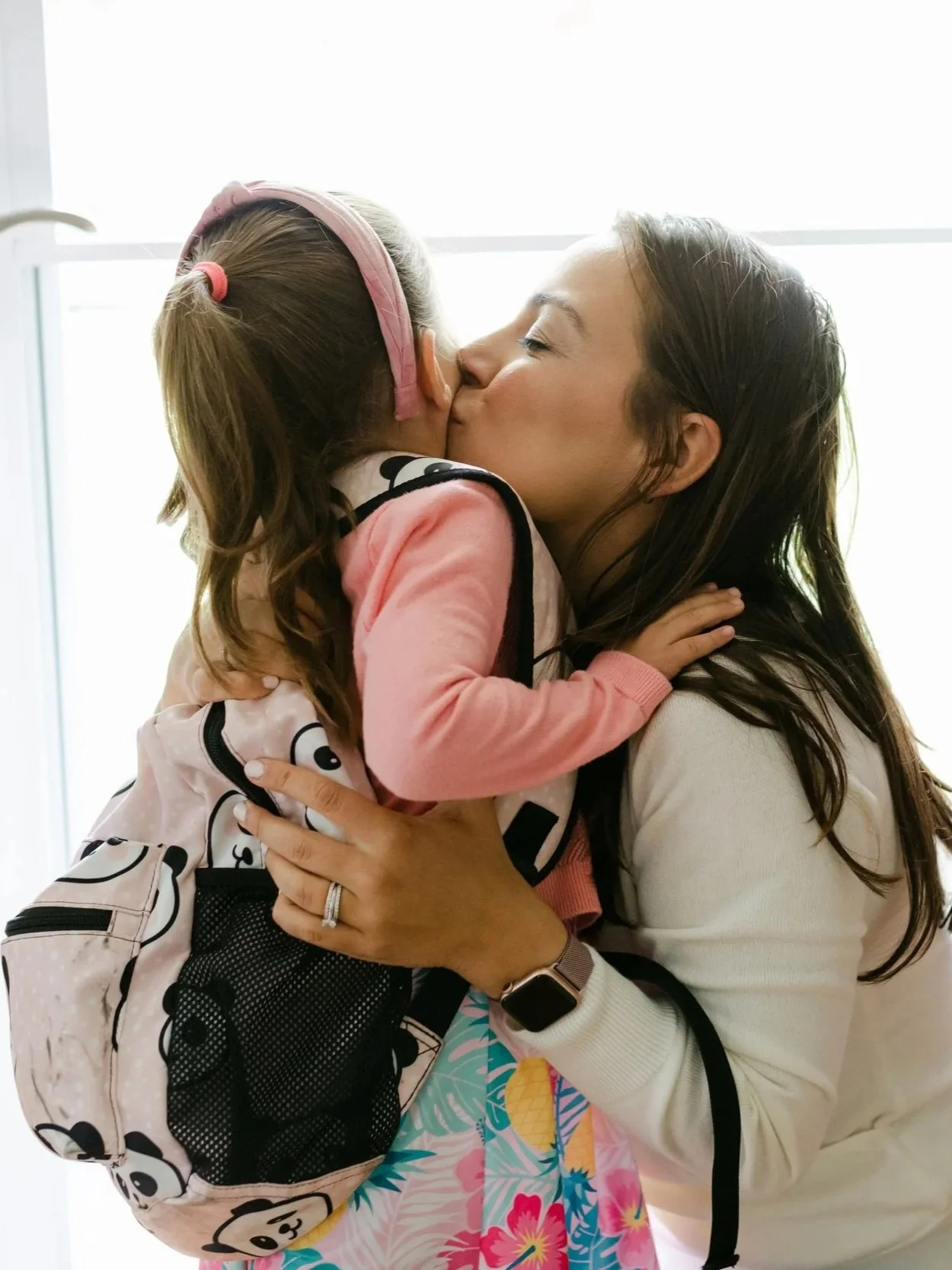
I think this is the piece most parents need to hear: you don’t need a perfect routine, you don’t need every night to go smoothly, and you don’t need to get it “right” 100% of the time. Just because some days feel off track doesn’t mean the routine isn’t working.
I’ve always thought about my days in “chunks”—morning, afternoon, evening. If one part goes off the rails, you reset at the next natural transition. And sometimes, the best thing you can do in the moment is step back and reset yourself.
Ellie put it really simply: if you’re not calm and present, it’s very hard to get things back on track. And that’s something I see play out all the time. Your energy matters just as much as the routine itself. So, if pausing the routine and taking 5 minutes to re-centre yourself will help you show up the way you want to… do it!
The Bottom Line
Routines aren’t about control. They’re about creating structure that your child knows:
What to expect
What’s expected of them
How to move through their day with confidence
When you have that, sleep gets easier, behavior gets smoother, and your child starts to show up differently—not because you forced it, but because the environment supports it.
Ready for More Support?
If you’re starting to feel like it’s all connected–you’re right! Sleep and behavior go hand in hand, and having the right support can make all the difference.


Meg O'Leary is an Infant and Child Sleep Expert and the founder of A Restful Night. Based in Westchester County, NY, she leads a team of certified sleep coaches to provide virtual support to families across the US and around the world.