How to Adjust Sleep When Starting Daycare or Preschool
Starting daycare or preschool is a milestone, and like most milestones, it can arrive with equal parts excitement and worry. You have packed the labeled water bottle and the spare change of clothes, and somewhere in the middle of it all, the question surfaces: will this impact their sleep?
I hear this from parents often, and I understand the concern. You have worked hard to build a rhythm that works, and handing part of the day over to someone else can feel like handing over your child's sleep along with it. The truth is that a strong foundation at home travels well. With a little preparation, this transition can be very manageable!
What to Find Out Before the First Day of School
One of the most useful things you can do is gather information early. The more you understand about the sleep setup, the more confidently you can prepare.
Before day one, try to learn:
Where and when your child will nap, and whether that schedule is fixed or flexible.
What you are allowed to bring, since some programs permit a pacifier, sleep sack, or lovey and others do not.
What the nap environment is like, including whether the room is darkened or separate, and whether sound machines are allowed.
What the class makeup is, because a cohort of same-age children runs very differently from a mixed group of infants and toddlers.
How the day is communicated back to you, whether through an app, a written log, or a quick end-of-day recap.
REMEMBER: You are the expert on your child, and you are paying for this care. Asking detailed questions is not an indication you are being difficult. It is you being a good advocate for your child!
Why This Transition Looks Different at Different Ages
Daycare and preschool are both major milestones, but they tend to happen at very different stages, which changes what the sleep adjustment actually looks like.
Infants and Young Toddlers Starting Daycare
Some children start daycare as young as four or five months, right in the middle of the infant stage, when naps are still frequent, and sleep needs are high.
At this age, the priority is protecting nap quantity, aiming for a good rhythm and ensuring your baby is getting good feeds at daycare. Short naps and a decent amount of variability to the day are an expected norm.
Toddlers and Pre-Schoolers Starting Preschool
Most children start preschool between two and four years old. By then the schedule is usually simpler, often a single midday nap or a quiet rest period, but the emotional side can be bigger. Separation awareness, a new environment, and a busier social day can all surface at bedtime for a week or two. Many parents find the post school meltdowns are extreme and sometimes bedtime can be a bit challenging. Oftentimes an earlier bedtime can help if your child is seemingly tired. Keep your routine as consistent as possible to avoid any bedtime regressions that can happen with this type of school transition.
Advocating for the Right Schedule
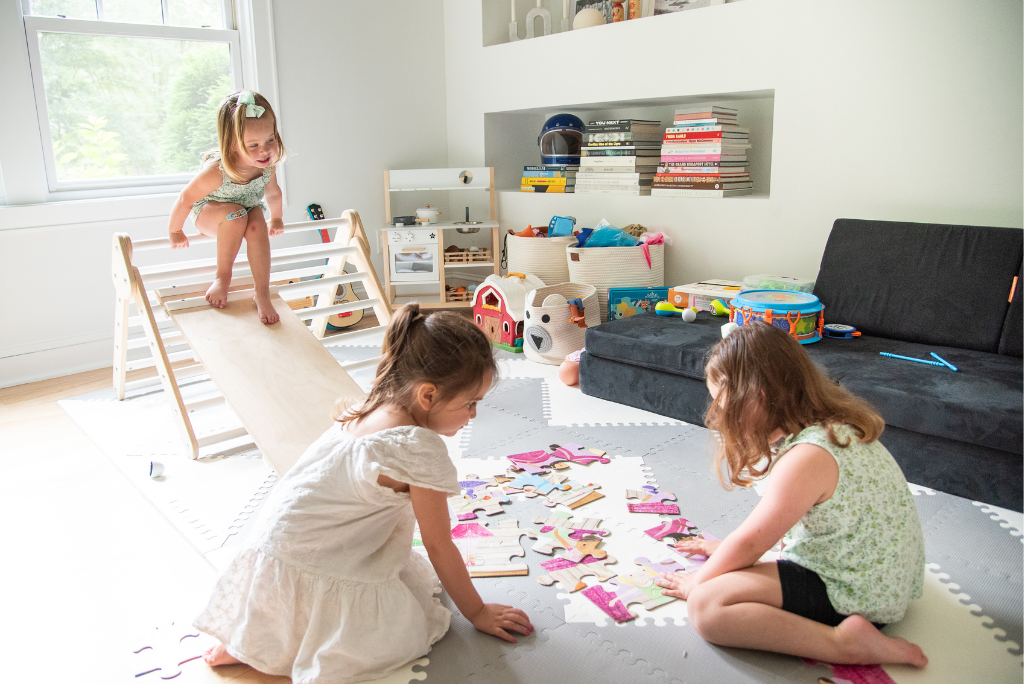
Once you have the information, you may find that a program's default rhythm does not quite match what your child needs, and that is worth speaking up about. A nine-month-old is not developmentally ready for a single nap, for example. If a program tends to push in that direction, you can respectfully explain where your child is and ask that their schedule be honored. Check out our full inventory of age specific schedules if you want to provide your daycare provider with a guideline.
A few things are worth advocating for specifically: nap timing that matches your child's wake windows, a calm and darkened nap space where possible, and supporting independent sleep practices, where your child falls asleep on their own or with minimal assistance. You will not always get every request granted, but naming what matters most gives caregivers a clear starting point to work from.
You will not be able to control every variable, and that is fine. But advocating early, collaboratively, and clearly helps your child's caregivers understand your priorities from the start. If care is also shared across a nanny, sitter, or grandparents, keeping everyone aligned matters just as much, and our guide on coordinating multiple caregivers can help. Most providers want the same outcome you do: a rested, settled child.
Protecting Independent Sleep Skills
If your child falls asleep independently at home, this is the piece I most want you to protect! Group settings are busy, and it is common for a caregiver to fall into patting, rocking, or sitting beside a child to speed things along. Over five days a week, that assistance can become an expectation, and parents often notice the ripple back at home as resettling difficulty at night.
I can speak to this specifically, when my daughter was 3 years old she had dropped her nap at home and was a perfect overnight sleeper. About 6 weeks into pre-school we had a major regression: bedtime battles, overnight wake ups and full blown tantrums at 3:00 a.m. I knew to ask the teacher how rest time was going, how long she was sleeping and whether she was acting out at school when it came time to nap. The answer was: “She is amazing, I send her to her nap mat and rub her back and sing to her and she falls fast asleep.” This was the information I needed and the cause of the regression. The teacher’s assistance five days a week at school was reducing her skill and changing her sleep expectations. She was expecting me to help in the same way at home – hence the regression.
The fix is simple communication. Let your caregivers know your child can settle on their own, and ask them to offer the same opportunity at nap time. If a few weeks of disruption do creep in, a short, consistent sleep reset at home usually brings things back to baseline.
Using the Daily Readout to Set Bedtime
The end-of-day readout is one of your most practical tools. Knowing when your child napped, how long they slept, and how much they ate lets you make smart decisions about the evening ahead. Over a couple of weeks, you will start to see patterns: which days tend to run long and which tend to fall short, and you can plan bedtime accordingly rather than guessing.
If the nap was short, move bedtime earlier to protect overnight sleep
If the nap went too late, move bedtime back to ensure a proper wake window before overnight sleep.
If your child barely napped, an earlier bedtime helps prevent the day from snowballing
If you are unsure what they ate, ask that uneaten food be sent home rather than tossed, so you can see the full picture
Preschools will not always hand you a detailed log, but you can still ask a teacher a simple question: did they nap today, and roughly when?
Final Thoughts
Starting daycare or preschool is a big change, but it is one your child is built to handle. Kids are remarkably resilient, and change simply takes a little adapting. A few short naps or unsettled nights in the beginning are normal, and they are not a sign that anything is broken.
The parents who move through this well are not the ones who control every variable. They are the ones who prepare where they can, communicate clearly with caregivers, and give the transition a couple of weeks to settle. If you have built a strong foundation at home, that foundation does not disappear the moment your child walks into a new room. It is still there, ready to fall back on.
If your child's sleep has become unpredictable and you are not sure where to start, book a complimentary consultation with A Restful Night. We will look at the full picture, home and daycare, and build a plan that fits your family's real life.
Meg O'Leary is an Infant and Child Sleep Expert and the founder of A Restful Night. Based in Westchester County, NY, she leads a team of certified sleep coaches to provide virtual support to families across the US and around the world.