How to Dress Your Child for Safe and Comfortable Winter Sleep
Just when you’ve finally settled into a solid bedtime routine, winter arrives with brand-new sleep challenges. One night your little one is waking up cold, the next they’re sweating through their pajamas. You find yourself standing in the doorway at 2 a.m. wondering if they need more layers or fewer.
You’re not alone. Cold outdoor temps, dry indoor heat, and the instinct to bundle up can actually disrupt sleep more than they help. The good news? With a few simple adjustments, you can keep your child cozy and safe all winter long.
In this guide, we’ll cover everything you need to know to make winter nights comfortable. From how cold weather affects sleep to choosing the right layers for bedtime, this blog has got you covered!

How Winter Weather Can Affect Child Sleep
Winter doesn't just change what's happening outside your windows… it transforms the entire sleep environment inside your home. And those changes can have a real impact on how well your child sleep:
Dry Air Disrupts Breathing and Comfort
Your furnace works overtime during winter months stripping moisture from the air. This dryness can lead to scratchy throats, stuffy noses, and uncomfortable breathing; all of which can wake your child during the night and leave everyone feeling exhausted in the morning. You might notice your little one waking more frequently, or struggling with congestion that wasn't an issue in warmer months.
Temperature Fluctuations Cause Restlessness
Even with heating, some rooms develop cold spots near windows or experience temperature drops overnight as the heat cycles on and off. Your child's body naturally tries to maintain an ideal core temperature during sleep, and when the environment keeps shifting, their sleep quality suffers. They might wake more frequently or sleep more lightly as their body works to stay comfortable.
Overdressing Creates Its Own Problems
In an effort to keep children warm, many parents inadvertently bundle them up too much. But here's what's important to understand: overheating during sleep is actually more disruptive (and more dangerous) than being slightly cool. It can cause night wakings, restless sleep, and in infants, increases safety concerns that we definitely want to avoid.
How to Create a Cozy and Safe Sleep Environment
Before we talk about pajamas and sleepwear, let's set the stage with the sleep environment itself. Getting the room conditions right makes choosing appropriate sleepwear so much easier.
Maintain the Ideal Room Temperature
According to the American Academy of Pediatrics, your child's room should stay between 68°F and 72°F (20°C to 22°C) throughout the night. This range supports quality sleep without requiring heavy blankets or excessive layering. If you don't have a thermostat in your child's room, consider picking up a simple room thermometer or check if your baby monitor has a built-in temperature sensor (hint: the Nanit has this feature).
Think About Furniture Placement
Take a look at where your child's crib or bed sits in relation to windows, heating vents, and exterior walls. Cold drafts from windows can create uncomfortable temperature pockets, while being positioned too close to a heating vent might cause overheating. Even moving the crib or bed a few feet away from these elements can make a noticeable difference in maintaining consistent comfort throughout the night.
Add Moisture Back Into the Air
A cool-mist humidifier is worth its weight in gold during winter months. It counteracts the drying effects of indoor heating, helping your child (and the rest of your family) breathe easier and wake up without that scratchy throat feeling. Place it safely away from the crib or bed, but close enough to effectively humidify the room. Just remember to clean it regularly: a dirty humidifier can circulate mold or bacteria, which defeats the entire purpose.
Use Window Treatments Strategically
Blackout curtains or insulated drapes do double duty in winter. They block cold drafts from seeping in around windows while helping retain the warmth inside the room. Plus, they keep your energy bills in check: a win for your wallet and the environment.
How to Dress Your Child for Winter Sleep
Now for the main event: what should your child actually wear to bed? The answer might be much simpler than you think!
Start with Breathable Base Layers
Lightweight cotton or fleece pajamas make an excellent foundation. They provide warmth without trapping too much heat against your child's skin. The goal is breathable layers that allow your child's body to regulate temperature naturally throughout the night.
Choose the Right Sleepwear for Their Age
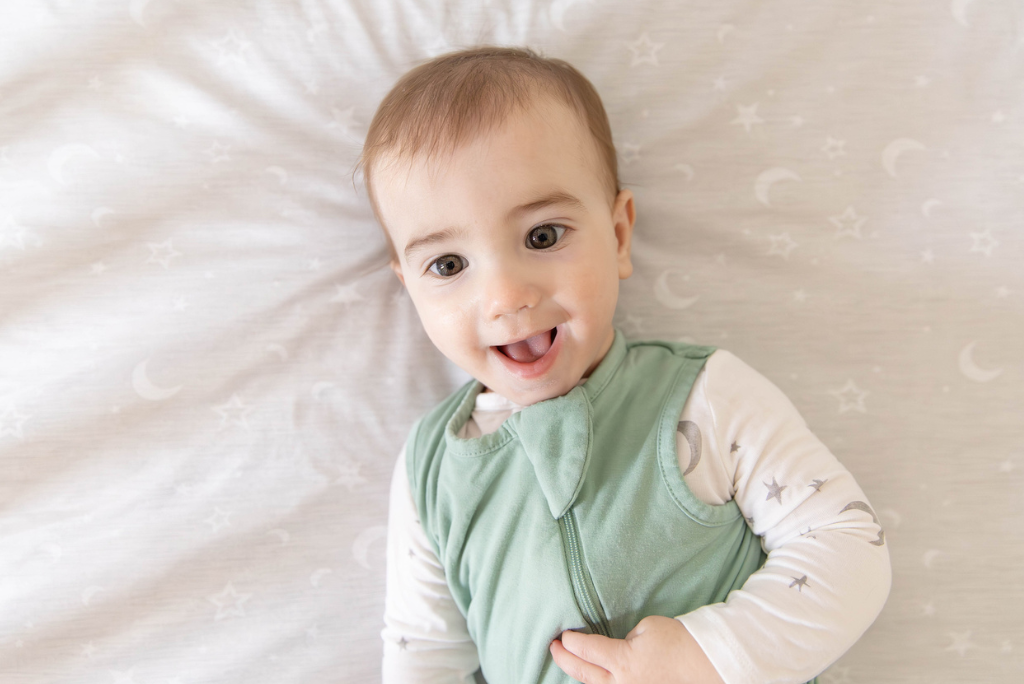
For infants and toddlers, sleep sacks or wearable blankets are a wise choice. They keep your little one warm throughout the night without any of the safety risks that come with loose bedding. If you were thinking about transitioning your toddler to a blanket this winter, consider waiting until spring. The safety and practicality of a sleep sack makes cold-weather sleep so much easier to manage.
Sleep sacks come in different warmth levels, so you can choose the right one for your home's temperature and adjust as needed throughout the season.
Pay Attention to TOG Ratings
If you're shopping for sleep sacks or winter sleepwear, you'll see something called a TOG rating. This stands for Thermal Overall Grade, and it's basically a measurement of how much insulation a fabric provides.
In simpler terms: a lower TOG rating means the fabric is lighter and cooler, while a higher TOG rating indicates it's thicker and warmer. Lower TOG ratings (0.5-1.0) work for warmer rooms, while higher ratings (2.5-3.5) suit cooler environments. It takes the guesswork out of choosing the right warmth level.
Stick with Natural Fabrics When Possible
Synthetic materials can trap too much heat and moisture, leaving your child sweaty and uncomfortable. Natural fabrics like cotton and bamboo allow for better airflow and temperature regulation throughout the night. They're more forgiving if the room temperature fluctuates slightly, helping your child stay comfortable without overheating.
Keep It Simple
Here's a reassuring truth: if your house is comfortable enough for you to sleep in light pajamas, your child is probably comfortable too. You don't need to dress them like they're heading out to build a snowman. Remember, children often generate more body heat than adults, so they typically need the same amount of coverage or even slightly less. Don't overcomplicate it. A simple pajama set or a sleep sack over a onesie is usually all your child needs for a comfortable night's sleep.
Remove Anything That Could Cause Overheating
Before laying your child down, take off hats, hooded sweatshirts, and scarves. These are great for outdoor winter adventures but have no place in the sleep environment where they can lead to overheating. Hats in particular can cause babies to overheat quickly, so always remove them before sleep—even if your child's hands feel cool to the touch.
How to Tell If Your Child Is Too Hot or Too Cold
Feel Their Core, Not Their Extremities
Your child's hands and feet might feel cool to the touch even when they're perfectly comfortable. This is completely normal and doesn't indicate that they're too cold overall. Blood flow naturally prioritizes the core of the body, so cooler hands and feet don't necessarily mean your child needs another layer.
For an accurate read on their body temperature, gently feel the skin on the back of their neck, their chest, or between their shoulder blades. These areas give you a much better sense of whether your child is actually cold or comfortably warm.
Look for These Comfortable Temperature Signs
Your child's core should feel warm and dry, not sweaty or cold to the touch. Their skin shouldn't feel clammy or damp, which would suggest they're too warm.
Watch for Sweating as a Red Flag
If you find your child with damp hair, a sweaty neck, or moisture on their chest, they're likely too warm. Strip back a layer or adjust the room temperature down a bit. Consistent overheating can lead to disrupted sleep and increased night wakings.
Trust Your Own Comfort Level as a Baseline
Stand in your child's room for a minute in similar clothing to what you'd wear to sleep. If you feel comfortable, chances are your child will too. Remember, your furnace is working hard to keep your home’s temperature as close to normal as possible. Even if it’s freezing outside, their room is likely quite comfortable already.
Make Safe Bedding Choices
When it comes to bedding, less is more, especially for younger children. Safe sleep guidelines don't change just because the temperature drops, so it's important to choose bedding that adds warmth without compromising safety.
For Toddlers Over Two Years Old
Once your child reaches two years old, you can introduce lightweight blankets and small pillows. Opt for flannel sheets or cozy bedding materials that add warmth without excessive bulk. Choose blankets that are easy for your toddler to push off if they get too warm during the night.
For Infants Under 12 Months
Stick with a firm mattress and a fitted sheet, with nothing else in the crib. Avoid pillows, bumpers, or loose blankets entirely. These items pose suffocation risks and aren't worth the danger, no matter how cold it gets. Instead, dress your baby appropriately in layers or a sleep sack to provide the warmth they need.
This is where sleep sacks really shine. They keep your baby warm and cozy while maintaining a completely safe sleep space.
Do's and Don'ts of Winter Sleep
Let's make this easy with some clear guidelines for what works and what to avoid when it comes to winter sleep safety and comfort.
DO use a humidifier to combat dry air
DO layer clothing instead of piling on blankets
DO choose appropriate bedding for their age
DO keep the room temperature consistent
DON'T use electric blankets in your child's bed or crib
DON'T rely on bulky bedding for warmth
DON'T use pillows, bumpers, or loose blankets for infants
DON'T forget to check on temperature throughout the season
Final Thoughts
Creating a comfortable winter sleep environment really comes down to this: light layers, consistent room temperature, and paying attention to your child's cues. You don't need fancy gadgets or complicated systems; just a few thoughtful adjustments to your regular routine.
The beauty of these winter sleep strategies is that they work together. A properly heated and humidified room means you don't need to bundle your child up excessively. Appropriate sleepwear means you don't need risky bedding choices. And checking their core temperature instead of their hands gives you accurate information to make confident decisions.
If you're still feeling uncertain or dealing with sleep challenges that go beyond temperature concerns, you don't have to figure it all out alone. Whether it's winter wake-ups, bedtime resistance, or establishing a routine that lasts through every season, A Restful Night's sleep consultants are here to support your family. We offer complimentary consultation calls to help you understand your options and find the right approach for your unique situation.
Book a complimentary consultation call today, and let's create a sleep plan that keeps everyone rested and happy all year long.
Meg O'Leary is an Infant and Child Sleep Expert and the founder of A Restful Night. Based in Westchester County, NY, she leads a team of certified sleep coaches to provide virtual support to families across the US and around the world.